
Television is going through the biggest transformation since the invention of the remote control. For decades, watching TV meant a fixed schedule, a wall of wires, and a limited channel package that never quite matched what you actually wanted to watch. That era is fading fast. In its place, a smarter, internet-powered way of watching television has taken over living rooms across the world — and it’s called IPTV.
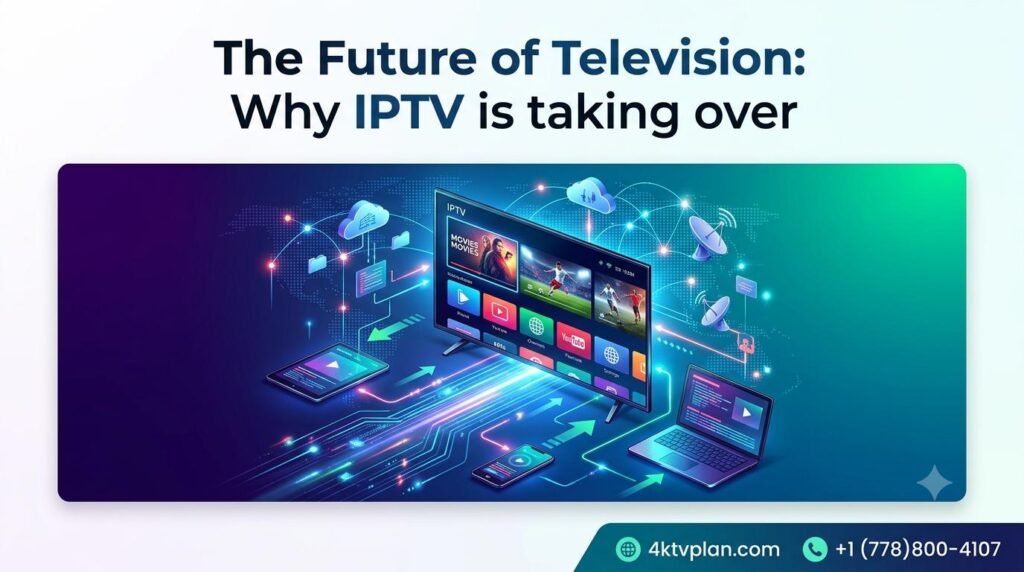
If you’ve noticed more people talking about streaming setups instead of cable boxes, you’re not imagining it. The future of television is already here, and it’s built entirely on internet-delivered entertainment. In this guide, we’ll break down exactly why IPTV is becoming the new standard, what’s driving the shift, and how you can make the switch without any hassle.
The Slow Decline of Traditional Television
Old-style television was built around one idea: the broadcaster decides what you watch and when. You got a fixed channel bundle, a fixed schedule, and very little control over any of it. If you missed a show, you missed it. If you wanted more sports or more international channels, you paid for an oversized package packed with content you never touched.
This model made sense decades ago, when there was no real alternative. But viewer habits have changed dramatically. Today’s households want content on their schedule, on their device, and in the quality they choose — not whatever happens to be airing at 8 PM. Younger viewers in particular have grown up with on-demand access to everything, and they simply don’t accept the old “wait for it to air” model anymore.
Traditional broadcast television also comes with baggage that modern viewers are tired of: long-term contracts, installation fees, equipment rental charges, and bundles padded with channels nobody watches. Every one of those pain points is exactly what pushed millions of households to start looking for a better alternative — and that search is what has fuelled the rise of IPTV.
What Makes IPTV Different
IPTV, short for Internet Protocol Television, delivers live channels, movies, and series directly over your internet connection instead of through satellite dishes or cable boxes. Instead of a rigid one-size-fits-all bundle, IPTV gives you access to thousands of live channels, on-demand libraries, and premium sports coverage — all through a single app on your Smart TV, phone, tablet, FireStick, or laptop.
The technology works by streaming video as data over the internet, the same way any other online video service works, rather than broadcasting a signal over the air or through a coaxial cable. That single difference changes everything about the viewing experience. There’s no dish to install, no technician visit, and no long-term contract holding you in place. You choose a plan, set it up in minutes, and start streaming instantly, whether you’re at home or travelling.
Because everything runs through an app rather than dedicated hardware, updates happen instantly too. New channels, new movies, and new features roll out in the background without you ever needing to swap a box or wait for a technician. It’s television built the way modern software is built — constantly improving instead of standing still.
Why IPTV Is Becoming the Future of Home Entertainment
A few key shifts are driving this change, and together they explain exactly why IPTV is taking over where old-style television is falling behind.
1. True 4K and Ultra-HD Quality
Picture quality has become non-negotiable. Viewers now expect crisp, true-to-life detail on every screen, especially for big-screen sports and movie nights. IPTV platforms are built around high-definition and 4K delivery, so entertainment finally matches the quality of modern TVs instead of holding it back. As more households upgrade to larger, higher-resolution screens, this gap between old broadcast quality and true 4K streaming keeps widening in IPTV’s favour.
2. One Subscription, Every Genre
Instead of juggling separate packages for sports, movies, kids’ content, and international channels, IPTV brings everything into one place. Live TV, a massive on-demand movie library, complete TV series, and global channel packs all sit inside a single subscription. You can browse our full channel list to see exactly how wide that range really is.
3. Freedom From Fixed Schedules
On-demand libraries mean you’re no longer tied to a broadcast schedule. Start a series whenever you like, catch up on missed episodes, and watch at your own pace, on your own screen. Weekend binge-watching, late-night catch-up sessions, and pausing a live match to grab a snack all become normal instead of impossible.
4. Multi-Device, Multi-Location Streaming
Modern households don’t watch from one room anymore. IPTV is built for that reality, working across Smart TVs, Android and iOS devices, streaming boxes, and laptops, often with multiple connections active on the same plan. One parent can watch the news in the kitchen while the kids stream a movie upstairs, all on the same subscription.
5. No Long-Term Contracts
Flexible, short-term plans mean you’re never locked into a service that no longer fits your needs. You can scale your subscription up or down as your household changes, without cancellation fees or awkward phone calls to a retention department.
Live Sports, Movies, and Global Channels — All in One Place
Sports fans have been some of the fastest adopters of this shift, and it’s easy to see why. Instead of chasing coverage across multiple packages, IPTV brings major leagues, pay-per-view events, and round-the-clock sports channels together under one plan. We covered this shift in detail in why sports fans are choosing IPTV in growing numbers, and the same pattern is playing out for movie lovers and series binge-watchers who want everything available the moment they open the app — a trend we broke down in why viewers want everything in one place.
This all-in-one approach is exactly what’s pulling viewers away from splitting their attention — and their budget — across several separate services. When live sports, blockbuster movies, and binge-worthy series all live in the same app, there’s simply no reason to keep the old, fragmented setup around.
The Rise of Personalized Entertainment
Today’s viewers don’t want a generic channel lineup — they want an experience shaped around their own taste. This is one of the biggest forces reshaping how television is consumed, and something we explored further in why personalized entertainment is taking over. IPTV platforms are built for exactly this kind of flexibility, letting every member of the household build a viewing experience around what they actually want to watch.
Instead of everyone in the house fighting over the same channel, each person can pull up their own app, on their own device, with their own favourites saved. That level of control was simply impossible under the old broadcast model, where one signal served every screen in the house identically.
How This Shift Is Playing Out Across Cities
This isn’t a niche trend limited to one region — it’s a shift happening in households everywhere. From major hubs to growing suburbs, more people are cutting the cord and moving to internet-based television. We’ve tracked this closely in cities like New York City, Los Angeles, Toronto, Winnipeg, and Washington, where families are replacing outdated bundles with flexible, all-in-one streaming plans. For a broader look at the trend nationwide, our guide to the best IPTV service in the USA breaks down exactly why the shift is accelerating.
What’s striking is how consistent the reasons are across every city we’ve covered. Whether it’s a growing suburb or a dense downtown core, the same complaints about rigid bundles and rising bills show up again and again — and the same solution keeps winning out.
Global and Cultural Content on Demand
Another major reason IPTV is winning over households is access to international content that traditional television bundles rarely cover well. Communities that want channels from their home country, in their own language, are finding IPTV far more accessible than older broadcast options — something we detailed in our guide to Indian channels available through IPTV in the USA.
For multicultural households, this matters enormously. Instead of paying for a separate international add-on package with a handful of channels, IPTV plans typically fold global content directly into the same subscription as domestic live TV, movies, and sports.
The Real Cost Savings Behind the Shift
Cost is one of the most practical reasons households are switching. Traditional bundles often combine equipment rental fees, installation charges, regional surcharges, and add-on packages that quietly inflate the monthly bill. IPTV plans tend to be refreshingly simple by comparison — one flat price covering live channels, on-demand movies, series, and sports. You can compare the available options directly on our subscription page to see how straightforward the pricing really is.
There’s also the hidden cost of juggling multiple separate subscriptions to cover sports, movies, and international content individually. When all of that content lives inside one plan instead, the total household entertainment spend often drops significantly, even while the amount of available content goes up.
The Technology Powering IPTV
Behind the simple app interface, IPTV runs on genuinely advanced infrastructure. Content is delivered through adaptive streaming, which automatically adjusts video quality to match your internet speed in real time, reducing buffering even when your connection fluctuates. An electronic programme guide keeps live channels organised the same way a traditional guide does, while a searchable on-demand library sits right alongside it in the same app.
Setting all of this up is far simpler than people expect. Our step-by-step setup tutorial walks you through getting IPTV running on whichever device you use most, whether that’s a Smart TV, a streaming stick, or a mobile device, usually in well under ten minutes.
This same infrastructure is what makes multi-device streaming possible without a drop in quality. Because the video is delivered as data rather than a single broadcast signal, the system can serve several screens at once, each with its own quality settings based on that device’s connection.
Practical Advantages Beyond Entertainment
- No dish, no drilling, no waiting for an installation appointment
- Works anywhere you have a decent internet connection, including while travelling
- Software updates happen automatically, without hardware replacements
- Easy to add or remove connections as your household size changes
- No paper contracts, credit checks, or long-term commitments
These practical, everyday advantages are just as important as the entertainment value itself. For renters, frequent movers, and anyone who has ever waited weeks for a technician appointment, the ability to set up television service in minutes — on your own terms — is a genuine quality-of-life improvement.
Who Is Actually Making the Switch
It’s tempting to assume this shift is only about younger, tech-savvy viewers, but the reality is far broader. Families are switching because a single subscription covers kids’ content, sports for the parents, and international channels for grandparents, all without juggling separate remotes or separate bills. Renters and frequent movers are switching because there’s no equipment to uninstall and no engineer visit to schedule every time they change address.
Retirees are switching because the interface is simpler than expected and the channel range is often wider than what they had before. Students and young professionals living away from home are switching because it’s the easiest way to keep up with local sports and hometown channels from wherever they’ve relocated. And busy households in general are switching simply because on-demand flexibility fits real life far better than a fixed broadcast schedule ever could.
What ties all of these groups together is the same underlying frustration with the old model: too rigid, too expensive, and too disconnected from how people actually live today. IPTV solves that frustration in a way that works across almost every household type, which is a big part of why adoption keeps accelerating rather than levelling off.
Getting Started Is Easier Than People Expect
One of the biggest myths about switching away from traditional television is that it’s complicated. In reality, setting up IPTV takes only a few minutes. You can browse our subscription plans to find an option that fits your household, follow our simple setup tutorial to get everything running on your preferred device, and check out our full channel list to see the range of live TV, sports, and entertainment included.
You can also head back to our homepage at any time for an overview of everything on offer, or explore more articles like this one on our blog for city guides, streaming tips, and the latest entertainment trends. If you ever need help along the way, our team is reachable through our contact page.
The Future Outlook
The direction is clear. Viewers want flexibility, quality, and content that fits their life instead of the other way around — and internet-delivered television is the format built to deliver exactly that. As more households move away from rigid, outdated setups, IPTV isn’t just an alternative anymore. It’s quickly becoming the standard way people watch television.
As internet speeds continue to improve and more devices become streaming-ready by default, the remaining gap between traditional broadcast television and IPTV will only get wider. Households that make the switch now aren’t just solving today’s frustrations — they’re positioning themselves ahead of where entertainment is clearly headed.
If you’re still holding onto an old-fashioned setup, now is the time to see what you’ve been missing.
Frequently Asked Questions
What exactly is IPTV?
IPTV stands for Internet Protocol Television. It delivers live channels, movies, and series through your internet connection instead of a satellite dish or cable box, so you can stream directly on Smart TVs, phones, tablets, and streaming devices.
Do I need special equipment to use IPTV?
No special hardware is required in most cases. A Smart TV, FireStick, Android device, or laptop with a stable internet connection is generally enough to get started.
How much internet speed do I need for smooth streaming?
A stable connection of around 10 Mbps or higher is usually enough for smooth HD and 4K playback without buffering.
Can I use IPTV on more than one device at the same time?
Many IPTV plans support multiple connections, so different family members can stream on separate devices at once, depending on the plan you choose.
Is IPTV cheaper than traditional TV packages?
IPTV plans are typically more affordable than bundled cable or satellite packages, since you get live TV, movies, series, and sports content in one flexible subscription instead of paying for multiple separate services.
Can I cancel or change my IPTV plan anytime?
Yes, most IPTV subscriptions are flexible with no long-term contracts, so you can adjust or cancel your plan whenever it suits you.
Can I try IPTV before committing to a full plan?
Many providers, including our own, offer a short trial period so you can test channel quality, stability, and device compatibility before choosing a longer subscription.
